This registration page may not work well in Internet Explorer. Please use a different browser to complete your registration.
Bringing a 4-Day, 32-Hour Workweek to Your Organization
October 1, 2026 2:00 PM - 4:00 PM
(EDT)
Description
This event is offered by our partner in another state. Please double-check times and time zones prior to registering.
Responding to crisis levels of overwork, disconnection, and burnout, organizations and their employees are exploring new approaches to work that can better support engagement and retention. The most transformative solution, proven to improve wellbeing, productivity, and retention across industries, is the 4-day, 32-hour workweek. In 2025, a group of MN nonprofit leaders participated in a practice community to figure out how to adopt the 4-day workweek at their organizations. In this session, they’ll share their experiences, an introduction to the model, and a chance to explore how it could work for your organization. This session is intended for organization decision-makers who are interested in exploring if this workplace model might be a good fit for their organization, although anyone who is curious to learn more is encouraged to attend.
Learning Objectives:
Understand what the 4-day workweek is, its benefits, and its growth in the US
Learn how the 4-day workweek is being implemented by and benefitting Minnesota nonprofits
Identify resources available to support your 4-day workweek transition
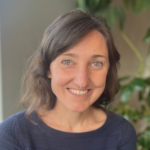
Daisy Morin (she/her) is a founding member of WorkFour, the national campaign for the 4-day workweek. She leads support and engagement efforts for employers adopting the 4-day workweek, including the 4-day Workweek Practice Community for Minnesota nonprofits. Daisy is also an artist, organizer, and strategist based in Northeast Minneapolis.
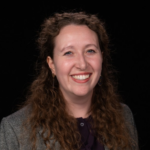
Laura Isdahl, Minnesota Practice Community Lead, WorkFourMN
Laura Isdahl (she/her) is a leader in WorkFour Minnesota, a key chapter of the national campaign for the 4-day workweek. Through relational and strategic organizing, she has worked with unions, elected officials, and community members to build power and fight for the right to our time for all workers. She has successfully supported employer adoption of a 4-day workweek through the Minnesota 4-Day Workweek Practice Community. When not community organizing, Laura can be found by the river or reading a book with her cat Poppy in their home in Saint Paul.
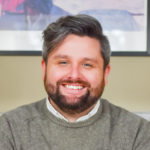
Aaron Zimmerman, M.A., CFRE, Executive Director, PFund Foundation
Aaron Zimmerman (he/him) is a career fundraiser and non-profit manager. He currently serves as PFund Foundation’s Executive Director. He holds a B.A. from the University of Wisconsin — Madison and has a Master of Arts in Philanthropy and Development from Saint Mary’s University of Minnesota. He wrote his capstone on the history and practice of white supremacy in philanthropy and fundraising in the United States. He currently serves on the boards of the Minnesota Council on Foundations as the chair, the ACLU of Minnesota, and Social Venture Partners-Minnesota as vice chair.
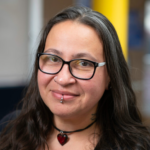
Rachel Martinez, Co-Executive Director, Human Resources & Organizational Culture, Hope Community
Rachel is one of four Co-Executive Directors at Hope Community, with specific oversight of human resources and organizational culture strategy. In this role, Rachel is responsible for the development and management of all human resources functions in support of a healthy workplace culture, and in alignment with Hope’s strategic initiatives and values. Rachel earned a bachelor’s degree in psychology and gender/sexuality studies from the University of Minnesota, and went on to develop professional experience in business management, operations, accounting, and team leadership in various settings. Upon transitioning to the nonprofit sector, Rachel focused her energy on human resources, and developing organizational practices that engage staff and promote equity and accountability at every level. In the context of relational integrity and transparency, Rachel has developed and championed administrative systems that provide clarity and inspire trust. She is interested in centering emotional intelligence as the vehicle for transformative leadership, and analyzing how organizations handle power and responsibility. Rachel provides consulting support to nonprofits needing support with their HR development and equity strategy, and volunteers occasionally as a facilitative mediator. Rachel’s current personal interests include weightlifting and singing in a choir.